 K-Clinic
Korea Facial Nerve Clinic: What Doctors Ask at Barrrjung

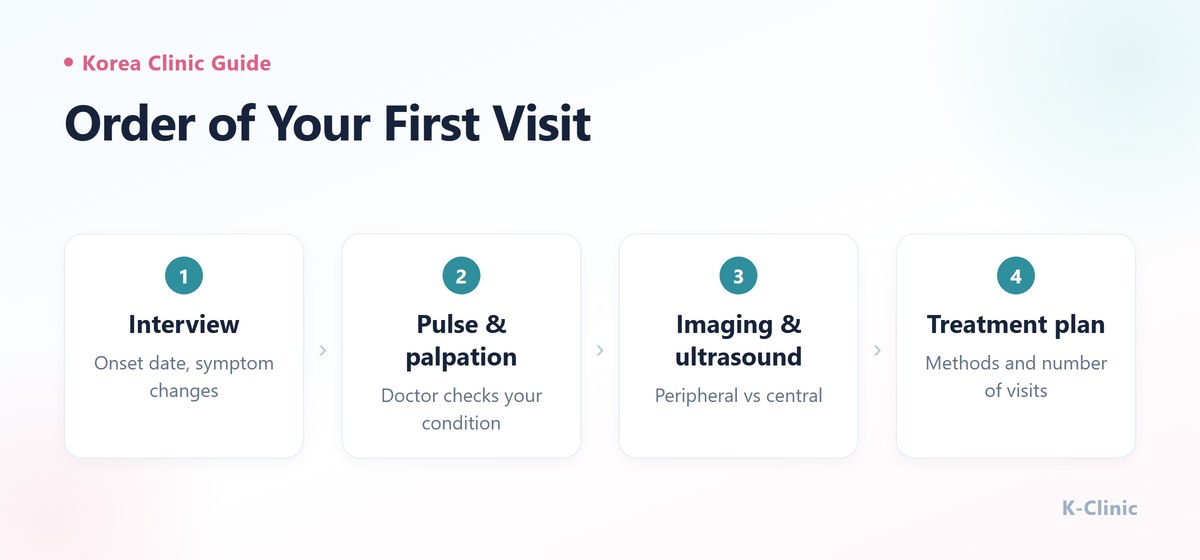
At Barrrjung Korean Medicine Hospital, a first visit for a facial nerve problem follows a set order: consultation, pulse and palpation, then imaging and ultrasound, before a treatment plan is made. Prepare 4 answers in advance: your onset date and how symptoms have changed, your current medications (especially blood thinners and steroids), your home-country medical records with MRI/CT images, and how many days you can stay in Korea. The doctor decides the cause and treatment after examination.
What happens at a first visit for facial nerve problems in Korea?
At Barrrjung Korean Medicine Hospital, the first visit goes in order: consultation, pulse and palpation, then imaging and ultrasound, and only after the cause is confirmed is a treatment plan made. Every question the doctor asks is meant to find the cause and tell peripheral paralysis from central paralysis.
A common situation for visitors flying to Seoul is arriving at the consultation room unable to remember the exact onset date or the name of the medication they take. This article uses the hospital's published process, symptom explanations and preparation list to set out the answers you can get ready in advance.
Barrrjung Korean Medicine Hospital has 7 doctors, Korean medicine doctors and Western medicine doctors, who work together on collaborative care. Director Jeong In-ho, a Korean medicine doctor, is president of the Korean Society of Facial Medicine and president of the Facial Palsy Research Society.
Facial palsy: note the date and the side
The most important answer for facial palsy is the onset date. The hospital explains that treatment in the early stage greatly affects the outcome and recommends visiting as early as possible.
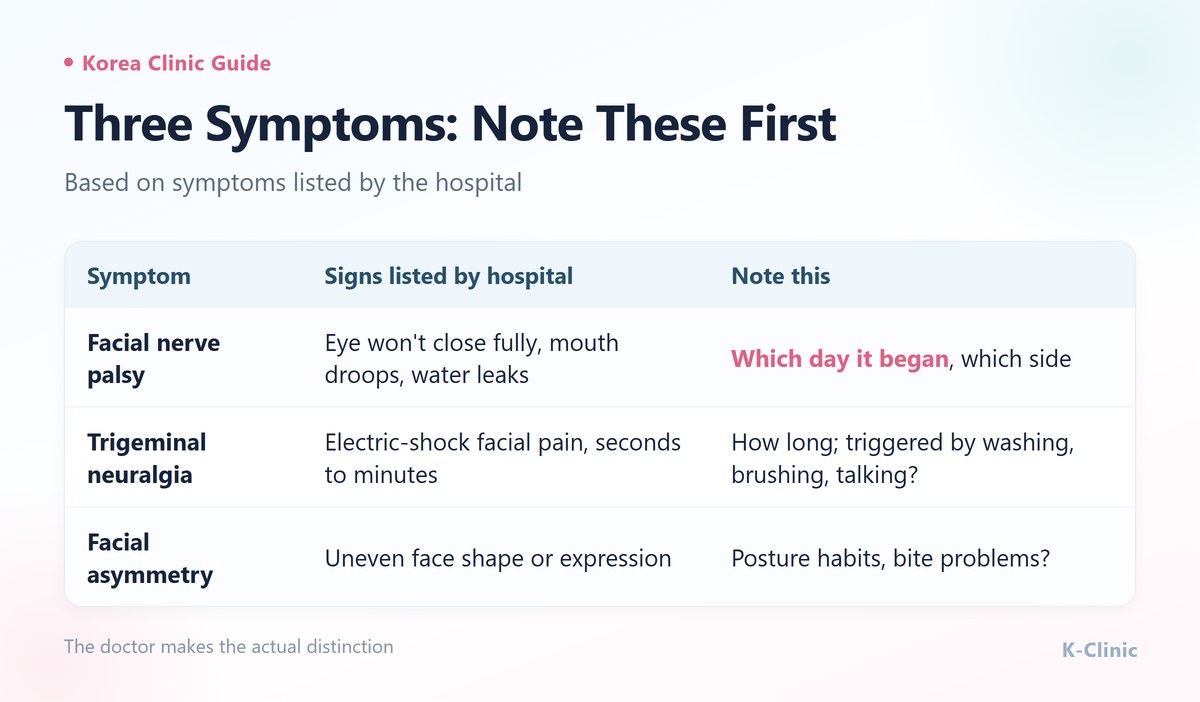
The hospital lists the common signs as one eye that will not close fully, a drooping corner of the mouth, leaking when drinking, and an asymmetrical expression. K-Clinic suggests noting down before you leave:
- The day, and roughly the time, you first noticed something wrong
- Which side, and what changed in the eye, mouth corner or forehead
- Whether things have improved, worsened or stayed the same since onset
- What treatment you have already had and which medicines you have taken at home
If you also have weakness or numbness in the arms or legs, slurred speech, or a sudden change in consciousness or vision, K-Clinic recommends going to a local emergency department immediately rather than waiting until you travel to Korea.
Trigeminal neuralgia: how long does the pain last, and when?
For trigeminal neuralgia, the key is how long the pain lasts and what triggers it. The hospital explains that trigeminal neuralgia is usually an electric-shock-like stabbing pain on one side of the face lasting seconds to minutes, triggered by washing the face, brushing teeth or talking, with pain-free periods in between. Toothache is usually a constant pain.
Telling the two apart is for the doctor to judge after examination, so what you can offer is your own observations: which side and which spot of the face hurts, how long each episode lasts, which actions trigger it, and whether there are times when you have no pain at all. If you have already seen a dentist at home, mention that too.
The hospital lists acupuncture, pharmacopuncture and shockwave as its treatments for trigeminal neuralgia. Which ones are used depends on the examination results.
Facial asymmetry: note your posture and bite
For facial asymmetry, the answers to prepare are your daily habits. The hospital explains that an uneven face shape or expression may be related to muscles, posture or bite.
K-Clinic suggests observing: which side you usually chew on, which side you sleep on, whether you rest your chin on your hand or look down for long periods, and whether anyone has ever mentioned a problem with your bite. The hospital lists balancing manual therapy and thread acupuncture as its treatments for facial asymmetry.
What should I bring whatever the symptom?
The hospital's preparation list asks for your home-country medical records and MRI/CT images, your onset date and symptom changes, and the medications you take (especially blood thinners and steroids). Add the number of days you can stay, and the doctor can judge how many sessions to schedule and how far apart.
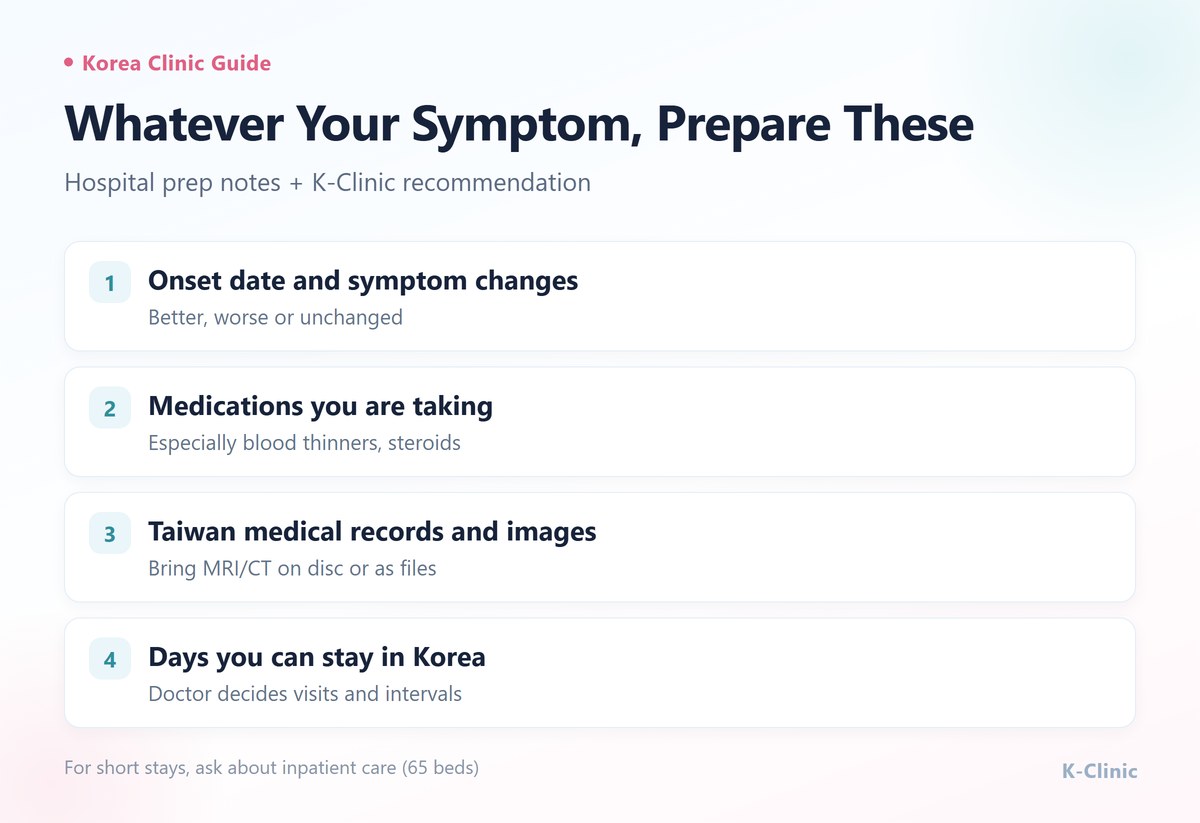
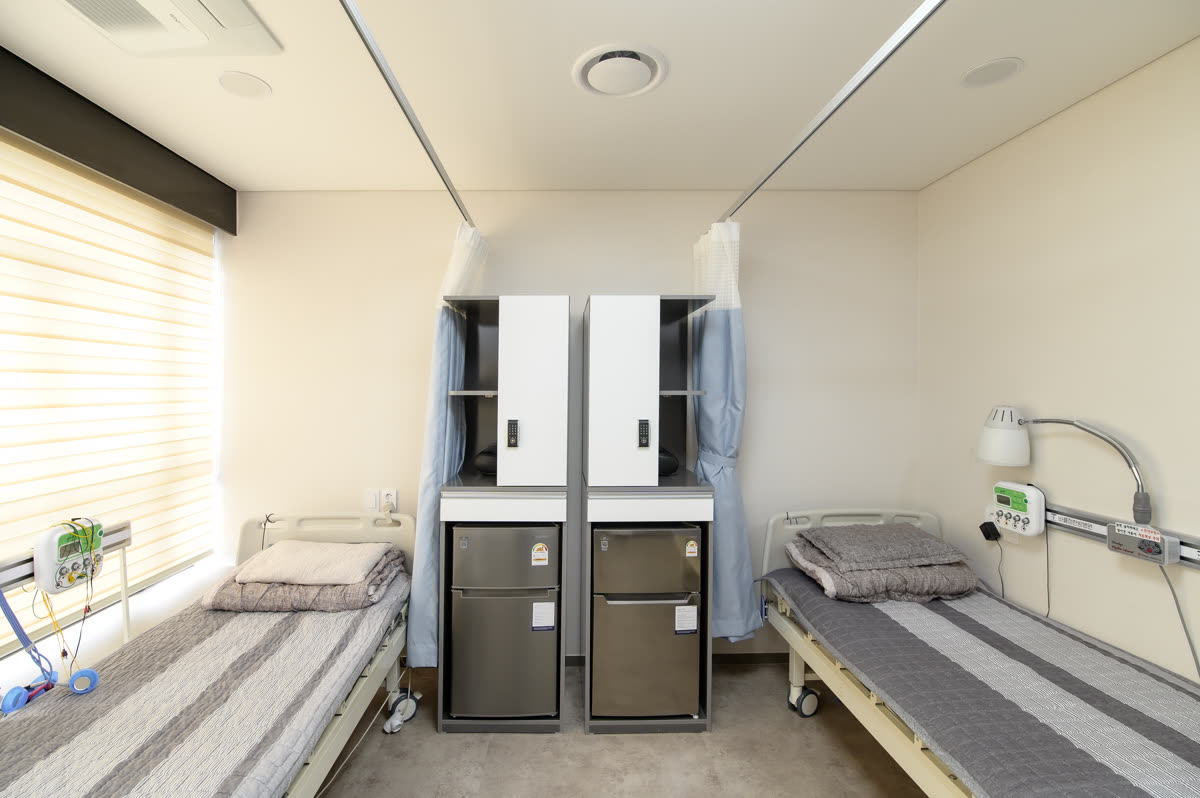
For medication, write down the drug name and dose, or simply photograph the packaging. Bring imaging on a disc or as files. If your stay is short, you can ask about inpatient care: the hospital has a 65-bed ward.
Common questions from international visitors
Q: Can I be seen right away if I arrive in Seoul at the weekend?
A: Yes, it can be arranged. Barrrjung Korean Medicine Hospital is open 09:00–15:00 on Saturdays, Sundays and public holidays (no lunch break), and 09:00–20:00 on weekdays (lunch break 13:00–14:00).
Q: Does Jeongan acupuncture hurt?
A: The hospital explains that one Jeongan acupuncture session uses about 150–200 needles and takes about 1 hour. Pain or swelling may appear after the needling, and details are explained before treatment.
Q: What will the doctor explain before I fly home?
A: In the hospital's process, the doctor checks your recovery before you return home and explains precautions and the direction of follow-up care.
How to book Barrrjung Korean Medicine Hospital through K-Clinic
With your answers prepared, consultation time goes to what matters. Through K-Clinic, you can use the "Request booking" button or the live chat on this website for a free consultation, with no need to contact the hospital in Korean yourself.
Tell us your onset date, symptoms, current medications and number of days in Korea, and we will check with the hospital:
- The date and time slot for your first visit (including weekends)
- How treatment can be arranged for your length of stay, and whether inpatient care is worth considering
- Which imaging and documents to bring
- Examination and test fees not listed on the price list
Once your booking is complete, we will send you your arrival time and the hospital address.
Actual treatment content and number of sessions depend on the examination results.
Frequently asked questions
How long does a first visit to Barrrjung Korean Medicine Hospital take in Korea?
The hospital does not publish how long a first visit takes. The process includes a consultation, pulse and palpation, and imaging and ultrasound tests, after which a treatment plan is made, so leave plenty of time. Ask for details through the K-Clinic live chat.
Why does the doctor keep asking when my facial palsy started?
The hospital explains that treatment in the early stage of facial palsy has a major effect on the outcome, so the onset date is key information for the doctor. Speed and degree of recovery vary from person to person.
Should I bring MRI and CT images to a Korean medicine hospital in Korea?
Yes. Barrrjung Korean Medicine Hospital lists your home-country medical records and imaging such as MRI and CT among the items to bring. Bring them on a disc or as digital files.
What if I don't speak Korean during a facial nerve consultation in Seoul?
You can book and ask questions in advance through the K-Clinic live chat or the "Request booking" button on this website. We suggest writing the answers listed in this article as notes beforehand and sending them to us so we can organise them.
Clinics in this article
Sindaebang Station (Line 2)