 K-Clinic
Neck and Shoulder Pain Not Going Away? Dr.Google Pain Clinic
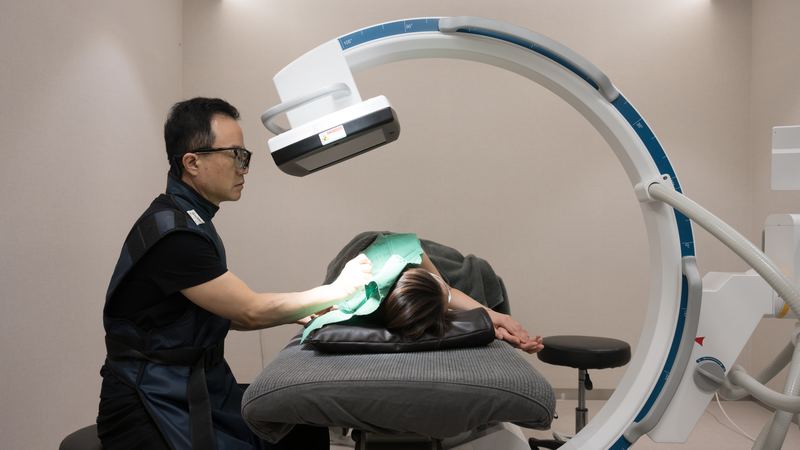
If neck and shoulder pain eases after massage, it is usually a muscle problem. If it comes with pain along the inner edge of the shoulder blade, numbness in the arm or fingers, or dropping things, a nerve may be involved and a pain clinic check is worthwhile. Dr.Google Pain Clinic in Anyang, Gyeonggi-do treats cervical disc herniation and confirms the source of pain through a consultation, a physical exam and imaging. Finger numbness can also come from carpal tunnel syndrome or an elbow nerve problem, so a doctor needs to examine you to tell them apart.
The short answer: aching plus numbness or weakness means massage alone isn't enough
Simple neck and shoulder aches are usually muscle tension, and massage or a heat pack tends to help. But if you've had many massages and it still isn't better, and numbness or weakness has started, it is worth checking for a nerve cause.
According to Dr.Google Pain Clinic, the typical symptoms of a cervical disc herniation are: neck and shoulder pain, pain along the inner edge of the shoulder blade, numbness in the arm or fingers, and dropping things. If these clues add up for you, we recommend having a pain specialist take a look.
This article explains how to tell the difference yourself, when to get checked, and how to describe your symptoms so the doctor can get to the point faster.
Simple aching vs. possible nerve involvement: what's the difference?
Compare these two patterns and see which sounds more like you:
- Simple aching: The pain stays in the neck and shoulder muscles, eases with massage or rest, and does not spread down the arm or into the fingers.
- Possible nerve involvement: Pain or numbness runs from the neck and shoulder into the arm and fingers, improves briefly after massage and then comes back, and your hand may even feel weaker.
This is only a general guide and cannot replace an examination. Whether the neck is really the cause has to be judged by a doctor based on your history, a physical exam and imaging.
3 clues to watch for in cervical disc herniation
According to the clinic, these are the common signs of a cervical disc herniation.
1. Pain along the inner edge of the shoulder blade. The pain is not on top of the shoulder but between the two shoulder blades or deep along their inner edge. It is hard to reach yourself, and massage rarely resolves it fully.
2. Numbness in the arm or fingers. The numbness travels from the neck and shoulder down the arm or into the fingers. It may be stronger in certain fingers and worse when you change posture.
3. Dropping things. Your fingers or arm lack strength, and chopsticks, cups or your phone slip out of your hand. This may mean muscle strength is affected, so we don't recommend waiting any longer.
One more note on numbness: finger numbness can also be carpal tunnel syndrome or an elbow nerve problem and doesn't always come from the neck, so a doctor needs to examine you to tell them apart.
When should you get checked at a pain clinic?
If any of the following applies, don't rely on massage alone. Arrange a pain clinic check:
- Neck and shoulder pain keeps coming back after massage or rest and never really improves
- Pain along the inner edge of the shoulder blade
- Numbness in the arm or fingers, worse at night or in certain positions
- Dropping things or weaker hand strength
Dr.Google Pain Clinic explains that disc herniation is assessed by MRI, symptoms and whether there is muscle weakness. When there is no progressive paralysis, non-surgical options such as injections can be considered first.
If you have already been advised to have surgery in your home country, you can also bring your records and hear other options.
How does Dr.Google Pain Clinic treat it?
At this clinic, Director Koo Jae-won (MD, PhD), a specialist in anesthesiology and pain medicine, personally handles everything from the first visit and examination to treatment and follow-up. Treatments include cervical disc herniation, lumbar disc herniation, spinal stenosis and shoulder pain.
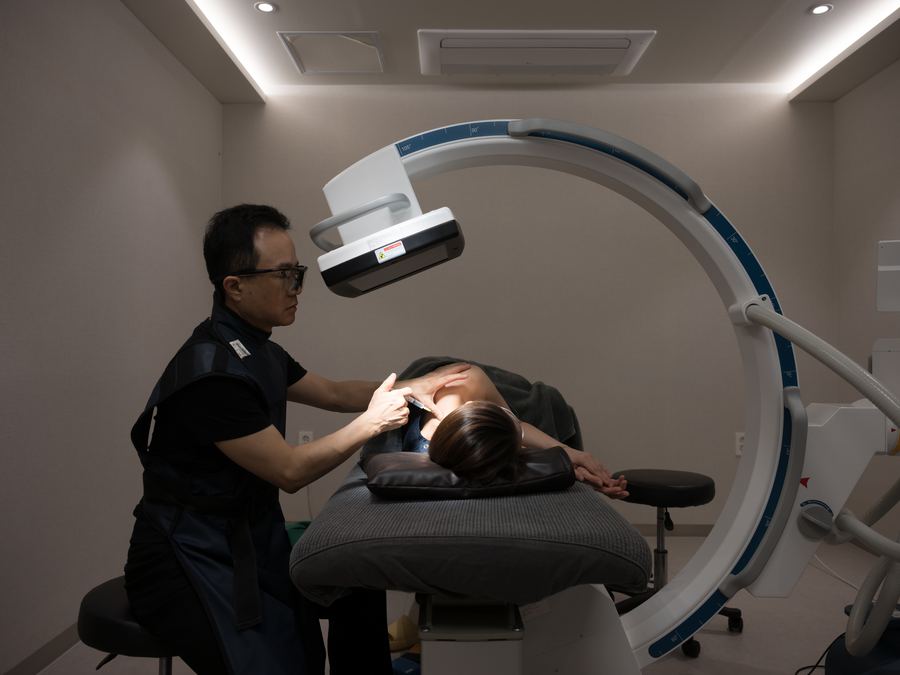
For treatment, a C-arm imaging device is used to confirm the nerve and the treatment site, and an ultra-fine MTS microneedle is used for precise injections. Steroids are used only after careful consideration depending on the condition, and are avoided where possible.
The first visit consists of a consultation, a physical exam and imaging to confirm the source of pain, and treatment can be done the same day when appropriate. Most people can walk after treatment and, after resting in the day ward, return to their accommodation. Whether further treatment is needed, and at what interval, is decided by the doctor according to your response.
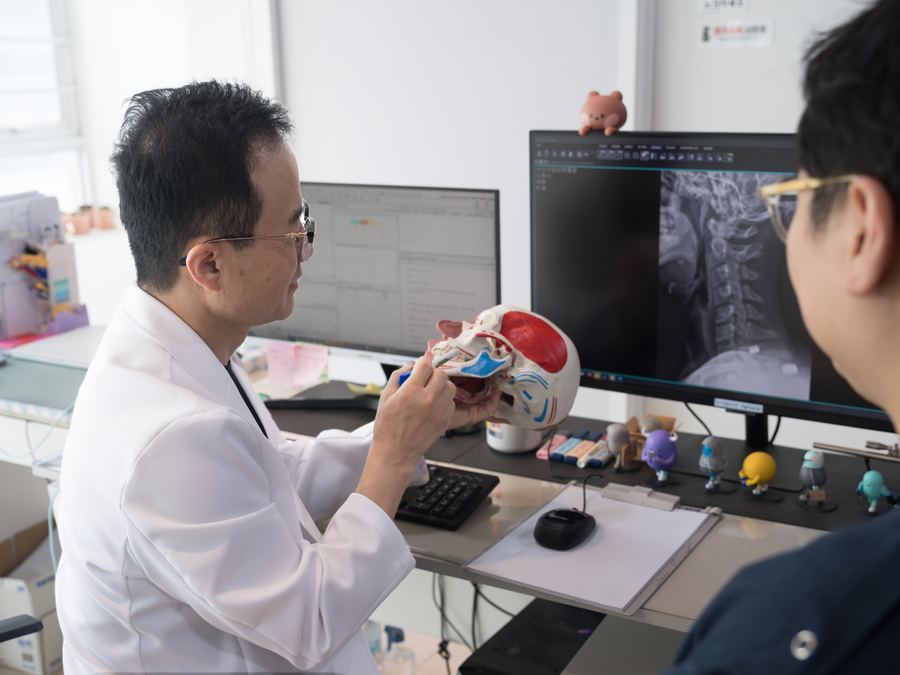
Results and recovery vary from person to person. Side effects and recovery are described only in general terms, so please follow your doctor's judgment.
How to describe your symptoms at the clinic
Pain is hard to explain with just "it hurts." Before your visit, organize these points:
- Location: Where does it hurt? The neck, shoulder, inner shoulder blade, arm or fingers? Which fingers go numb?
- Sensation: Is it aching, stabbing or burning, or is it numbness or an electric-shock feeling?
- Timing: When did it start? Is it worse in the morning, in the evening or in certain positions (looking down, using your phone, lying down)?
- Function: Do you drop things, or find buttoning clothes or typing harder?
- What you've tried: Which massages, medicines or rehabilitation have you done, and did anything help?
The clinic also recommends preparing the following in advance:
- MRI, CT or X-ray images or medical records from your home country, on a disc or as files
- Please tell the clinic about any medicines you are taking (especially blood thinners and painkillers)
Opening hours and how to get there
The clinic is at 214 Simin-daero, Dongan-gu, Anyang-si, Gyeonggi-do, in the Downtown Building, on the 7th floor (treatment room) and 8th floor (ward). Take Subway Line 4 to Beomgye Station; it is about a 5-minute walk from the exit. Parking is available in the building.
Opening hours:
- Mon & Fri 09:30–20:00
- Tue 14:30–20:00
- Wed 09:30–19:00
- Sat 09:30–14:00
- Closed Thu & Sun
The 8th floor has a ward, with a choice of a day ward stay of 6 hours or more or a 24-hour admission. The number of pain treatments varies from person to person and follow-up is sometimes needed, so please tell us how many days you will stay so the doctor can confirm whether your schedule is enough.
Frequently asked questions from international visitors
Q: Can I get on a plane right after treatment?
A: Most people can walk normally on the day of treatment, but please confirm your flight time with the doctor first.
Q: I only want a check-up. Do I need an MRI first?
A: Whether imaging is needed is decided by the doctor. If you have images from your home country, bring them on a disc or as files so the doctor can refer to them.
Q: How much do the exam and treatment cost?
A: Please ask through the K-Clinic live chat.
Q: How many days do I need to stay?
A: It varies from person to person, and follow-up treatment is sometimes needed. Please tell us how long you will stay when you inquire, and the doctor will confirm.
Book Dr.Google Pain Clinic through K-Clinic
The more clearly you describe your symptoms, the better the doctor can get to the point. Through K-Clinic, you can use the free live chat to organize your symptoms and your schedule first, then send a booking with the "Request booking" button.
We check the following with the hospital for you:
- Which appointment times suit your symptoms (neck and shoulder pain, numbness, weakness)
- How to prepare and bring your MRI, CT and X-ray images from home
- Whether your length of stay is enough and whether you need to rest in the day ward
- Cost information and the consultation process
Once your booking is complete, we will tell you your arrival time and the address.
The actual treatment depends on the results of your examination.
Frequently asked questions
Is neck and shoulder pain that massage doesn't fix a cervical disc herniation?
Not necessarily. But if the pain comes with pain along the inner edge of the shoulder blade, numbness in the arm or fingers, or dropping things, a nerve may be involved. A pain clinic check is recommended, and the doctor decides based on your history and imaging.
Is finger numbness always a neck problem?
No. Finger numbness can also be caused by carpal tunnel syndrome or an elbow nerve problem, so a doctor needs to examine you to tell them apart.
Does a cervical disc herniation always need surgery in Korea?
No. Dr.Google Pain Clinic explains that when there is no progressive paralysis or loss of bladder or bowel control, non-surgical treatment can usually be considered first. The actual direction depends on your MRI and symptoms.
Where is Dr.Google Pain Clinic in Korea?
It is at 214 Simin-daero, Dongan-gu, Anyang-si, Gyeonggi-do, on the 7th floor of the Downtown Building. Take Subway Line 4 to Beomgye Station; it is about a 5-minute walk from the exit.
Clinics in this article
About 5 min walk from Beomgye Station (Line 4)