 K-Clinic
Back & Neck Pain After Workouts? Pain Clinic Korea Guide
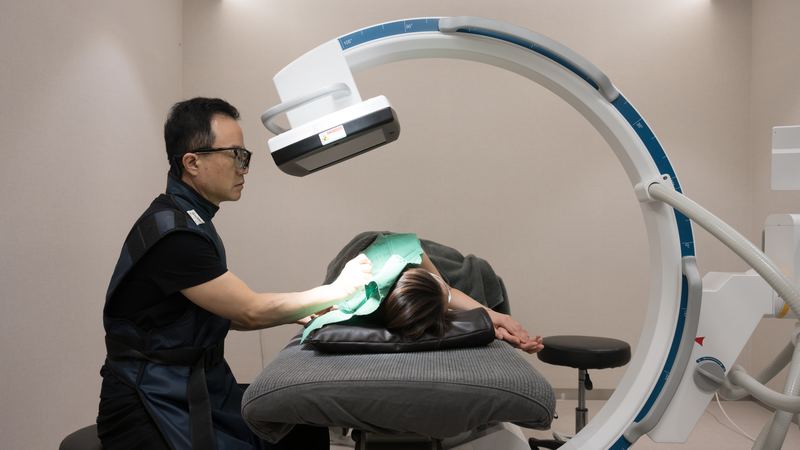
If back or neck pain after working out won't go away, or spreads to the buttock, leg or arm, or comes with numbness or weakness, it may be a herniated disc, so get it checked before you keep training. Dr.Google Pain Medicine Clinic in Anyang, Gyeonggi (about a 5-minute walk from Beomgye Station) treats lumbar and cervical disc herniation using C-arm imaging to confirm nerve position before treatment. Tell the doctor your sport, training load and injury history. When you can return to lifting or ball sports is the doctor's decision, so ask at your visit.
Short answer: pain that spreads, or numbness and weakness, should not be pushed through
Most post-workout soreness eases gradually with rest. If back or neck pain won't go away, or spreads to the buttock, leg or arm, it is worth getting examined.
Dr.Google Pain Medicine Clinic lists lumbar disc herniation and cervical disc herniation among its main treatments. The clinic's view is that surgery isn't always necessary; the first step is to find the cause of the pain.
This article covers three things: how a herniated disc can show up, which training habits to tell the doctor at your visit, and what to ask about returning to exercise after treatment.
Which post-workout pain may be related to a herniated disc?
According to the clinic, you can start by comparing your symptoms with this list:
- Lumbar disc herniation: pain spreading from the lower back to the buttock and leg, pain that gets worse when sitting for long or coughing, weakness in the ankle or toes.
- Cervical disc herniation: sore neck and shoulders, pain inside the shoulder blade, numbness in the arm or fingers, dropping things easily.
Weight training and ball sports involve repeated bending, twisting, looking down or loading the spine, so many people's first thought is "did I overtrain?" But symptoms alone cannot identify the cause. A doctor needs to review your MRI, symptoms and muscle strength.
Numb fingers can also be caused by carpal tunnel syndrome or an elbow nerve problem, which a doctor needs to examine to tell apart.
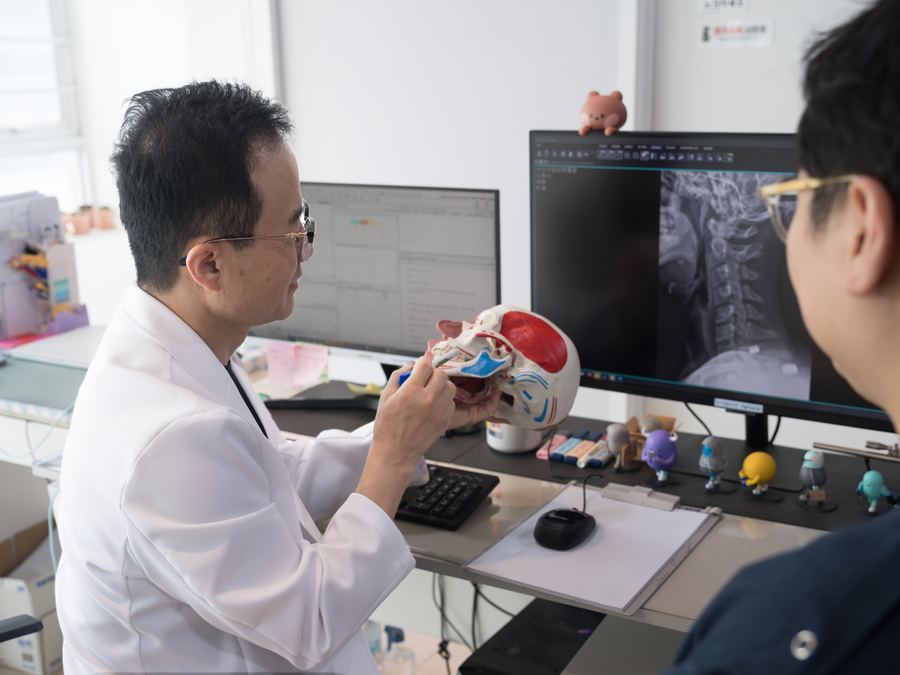
When should you see a doctor right away?
The clinic says that when deciding whether non-surgical treatment is an option, it looks at the MRI, your symptoms and whether there is muscle weakness. Two signs need particular attention: progressive paralysis and loss of bladder or bowel control.
If your legs or arms are getting weaker, numbness is spreading, or you notice problems with bladder or bowel control, do not wait for your trip to Korea. See a doctor near you first. Whether treatment during travel is suitable in such cases is the doctor's decision.
Which exercise habits should you tell the doctor?
Your training information helps the doctor work out where the pain comes from. We suggest preparing the following in advance:
- Sport and frequency: weight training, badminton, basketball, running, and how many times a week.
- Training content: which movements you do often (for example squats, deadlifts, shoulder press, smashes) and roughly how much weight.
- When the pain started: suddenly after a certain movement, or gradually getting worse.
- Location and direction of pain: only in the lower back or neck, or spreading to the buttock, leg, arm or fingers.
- What makes it worse: sitting for long, coughing, looking down, raising your arms overhead.
- What you have done so far: how long you have rested, and whether you have used painkillers, patches or rehabilitation.
- Your goal: what level of training you want to get back to.
K-Clinic's suggestion: write these down as notes and send them to us before your visit, so nothing is missed on the day.
How does Dr.Google Pain Medicine Clinic examine and treat?
The director, Dr. Koo Jae-won, is a board-certified specialist in anesthesiology and pain medicine with a medical doctorate. He personally handles everything from the first consultation and examination to follow-up after treatment.
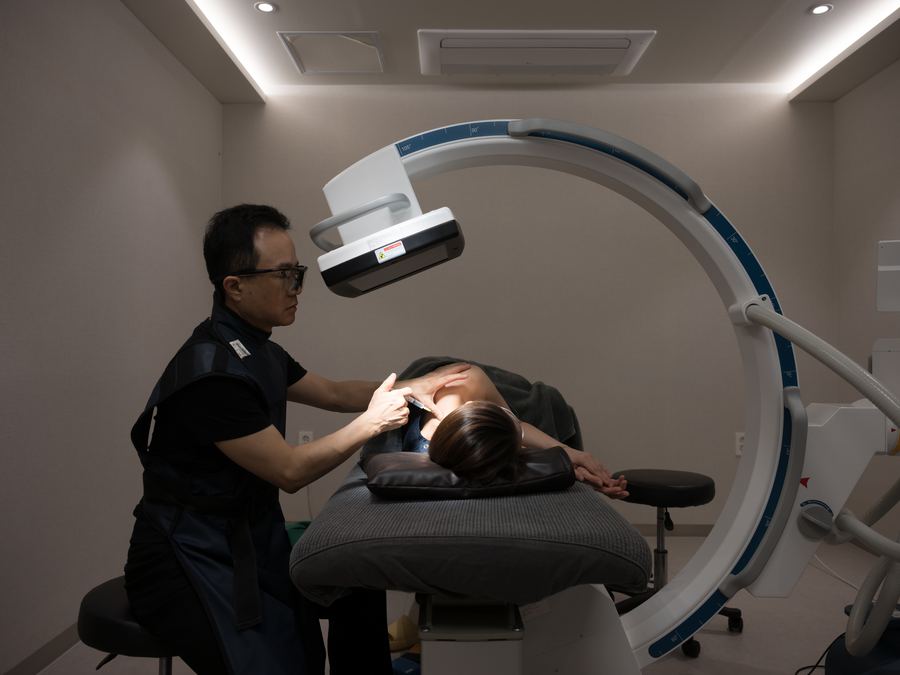
The clinic uses C-arm imaging to confirm the nerve and treatment location, and injects near the source of pain with very fine MTS micro-needles to reduce tissue damage. Whether to use steroids is decided carefully based on your condition, and they are avoided where possible.
If there is no progressive paralysis, non-surgical treatment such as injections can be considered first. People who have already been advised to have surgery can also come to hear other options. The actual treatment direction depends on the examination results and is decided by the doctor.
When can you return to exercise after treatment?
The clinic's information does not state "you can lift after X days" or "you can play ball sports after X weeks," so we cannot answer this for you; please ask the doctor directly.
What can be confirmed is that most people can walk on the day of treatment and can rest in the day ward before returning to their accommodation. For exercise beyond walking, ask at your visit based on your own sport:
- When can I start weight training? Which movements (squats, deadlifts, shoulder press) should I avoid first?
- When can I return to ball sports such as badminton or basketball?
- How light should I start, and how should I build the load back up?
- What symptoms mean I should stop and come back for a check-up or see a doctor?
Whether you need repeat treatment, and how far apart, is also decided by the doctor based on your response. A commonly held principle is that less pain does not mean you can go straight back to your previous intensity, so follow the doctor's judgment.
Visiting from abroad: ask about length of stay and flights first
The clinic explains that the number of pain treatment sessions varies from person to person, and follow-up treatment is sometimes needed. Please tell us your symptoms and length of stay in advance so the doctor can confirm whether your schedule is enough.
The general flow looks like this:
- Visit 1: consultation, physical exam and imaging to identify the source of pain; treatment on the same day if suitable.
- After treatment: most people can walk the same day and can rest in the day ward before returning to their accommodation.
- Afterwards: whether you need repeat treatment, and how far apart, is decided by the doctor based on your response.
The 8th floor has wards, with a day-ward option of 6 hours or more, and 24-hour hospitalization is also available when continued observation is needed. Can you fly right after treatment? Please confirm flight timing with the doctor first.
Location and opening hours
The clinic is in Anyang, Gyeonggi Province. Take Subway Line 4 to Beomgye Station; it is about a 5-minute walk from the exit. The address is 214 Simin-daero, Dongan-gu, Anyang-si, Gyeonggi-do, Downtown Building, 7th floor (treatment rooms) and 8th floor (wards). Parking is available in the building.
- Mon & Fri: 09:30–20:00
- Tue: 14:30–20:00
- Wed: 09:30–19:00
- Sat: 09:30–14:00
- Thu & Sun: closed
Note that on Tuesdays the clinic opens in the afternoon only. Avoid Thursdays and Sundays when planning your visit.
Frequently asked questions from international visitors
Q: What should I bring?
A: Bring any MRI, CT or X-ray images or medical records from home, on disc or as files. Please also tell the clinic about any medication you are taking, especially blood thinners and painkillers.
Q: I've already been advised to have surgery. Can I still ask about other options?
A: Yes. The clinic says people who have been advised to have surgery can also come to hear other options. The actual direction is decided by the doctor based on your MRI and symptoms.
Q: How much does it cost?
A: The clinic does not publish a price list. Please ask through the K-Clinic live chat or the Request booking button on this website.
Q: Can I get a consultation in my own language?
A: Please use the K-Clinic live chat or the Request booking button on this website to tell us your symptoms and schedule before you visit.
Book Dr.Google Pain Medicine Clinic through K-Clinic
For pain in people who exercise, what matters is the location of the pain, your training habits and your recovery timeline. Use the K-Clinic live chat for a free consultation and get these organized before you travel.
We will check these with the clinic for you:
- Whether your length of stay is enough for your symptoms
- Available dates and time slots (note that Tuesday opens in the afternoon only)
- How to prepare MRI and other imaging from home
- Cost and questions about returning to exercise after treatment, confirmed together during the consultation
Once your booking is complete, we will send you the arrival time and address.
Actual treatment depends on the examination results.
Frequently asked questions
Could back pain that won't go away after weight training be a herniated disc in Korea?
It's possible, but symptoms alone can't confirm it. Warning signs include pain spreading from the lower back to the buttock and leg, pain that worsens when sitting for long or coughing, and weakness in the ankle or toes. A doctor needs to confirm it with an MRI and a physical exam.
Which doctor should I see for neck pain and numb hands after playing sports?
You can visit a pain clinic. Dr.Google Pain Medicine Clinic in Anyang, Korea treats cervical disc herniation. Numb fingers can also come from carpal tunnel syndrome or an elbow nerve problem, so a doctor needs to examine you to tell them apart.
How long after treatment can I return to weight training or sports?
The clinic has not published a fixed number of days. Recovery time depends on your condition and how you respond to treatment, so ask the doctor directly at your visit and follow the doctor's judgment.
How much does Dr.Google Pain Medicine Clinic in Korea cost?
The clinic does not publish a price list. Please ask through the K-Clinic live chat or the Request booking button on this website.
Clinics in this article
About 5 min walk from Beomgye Station (Line 4)