 K-Clinic
Spinal Stenosis Leg Pain Korea: Dr.Google Pain Clinic MRI Visit
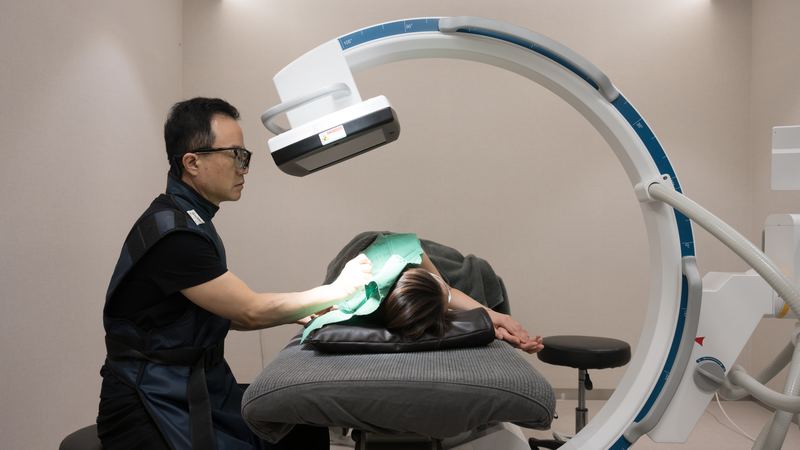
If your legs hurt or weaken after a short walk and ease once you rest, see a doctor: spinal stenosis and a herniated disc are both possible, and you can't tell them apart yourself. At Dr.Google Pain Medicine in Anyang, Korea, director Dr. Koo Jae-won, an anesthesiology and pain medicine specialist, decides based on MRI, symptoms and any loss of muscle strength. Without progressive paralysis, non-surgical treatment such as injections can be considered first.
Leg Pain When Walking That Eases With Rest: Get Your MRI Reviewed First
Leg pain or weakness after a short walk that improves when you squat or sit down is a nerve symptom well worth getting checked. There is more than one possible cause, and both spinal stenosis and a herniated disc are being considered.
Dr.Google Pain Medicine's approach is to decide based on MRI, symptoms and any loss of muscle strength. If there is no progressive paralysis, non-surgical treatment such as injections can be considered first.
This article covers how to prepare for your visit: how to describe your symptoms, how the clinic makes its assessment, and which directions are considered first. Any actual diagnosis is always based on the doctor's examination.
Spinal Stenosis vs Herniated Disc: How Do the Symptoms Differ?
Both can make your lower back, buttocks and legs uncomfortable, and it is hard to tell them apart by feel. The descriptions below are common general patterns, meant only to help you organize your thoughts before the visit, not as a diagnosis.
- Spinal stenosis: Commonly described as leg pain, aching, numbness or weakness after walking a certain distance, which eases when you stop and rest, bend forward or squat.
- Lumbar disc herniation: According to the clinic, pain typically runs from the lower back through the buttocks and into the leg, gets worse when sitting for long periods or coughing, and may come with weakness in the ankle or toes.
The two can also occur together, or the cause may be something else. That's why the key is to tell the doctor your full situation, then have it confirmed with an MRI and a physical exam.
How Do You Describe Your Symptoms? 6 Things to Note Before Your Visit
The more specific your description, the easier it is for the doctor to assess. Before you leave, jot down the following in your phone's notes app:
- How long you can walk before pain starts: Roughly how many minutes or hundreds of meters, and whether it has become shorter lately.
- Where it hurts: Lower back, buttocks, thigh, calf or foot; one side or both.
- What it feels like: Aching, stabbing, numbness, weakness or burning.
- What relieves it: Sitting, squatting, bending forward, or simply stopping.
- What makes it worse: Standing or sitting for long periods, coughing, leaning backward.
- Any weakness: Trouble using your ankle or toes, tripping easily, or slippers falling off easily.
If you have leg weakness that is clearly getting worse, or any change in bladder or bowel control, seek medical care as soon as possible rather than waiting until your trip.
How Does Dr.Google Pain Medicine Make Its Assessment?
The clinic is run by Dr. Koo Jae-won (MD, PhD), a specialist in anesthesiology and pain medicine, who personally handles everything from the first consultation and tests to follow-up after treatment.
According to the clinic, your first visit includes a consultation, a physical exam and imaging to identify the source of the pain, and treatment can be given the same day when appropriate. The key factors are the MRI images, how your symptoms present, and whether there is any loss of muscle strength.
The clinic also notes that people who have already been advised to have surgery are welcome to come and hear about other options. Whether a non-surgical approach suits you is still the doctor's decision.
Which Non-Surgical Treatments Are Considered First?
The clinic's principle is to find the cause of the pain first, rather than assuming surgery. Lumbar and cervical disc herniation are listed as non-surgical treatment areas, and spinal stenosis is also within its scope.
- Injection treatment: A C-arm imaging device confirms the nerve and treatment site, and an ultra-fine MTS microneedle reaches the source of pain to reduce tissue damage.
- Steroids: Used only after careful consideration based on your condition, and avoided where possible as a rule.
- Follow-up treatment: Whether you need another session and how far apart is decided by the doctor based on your response.
The clinic's materials do not list a specific treatment combination for spinal stenosis. Please confirm the details and suitability with the doctor after your examination.
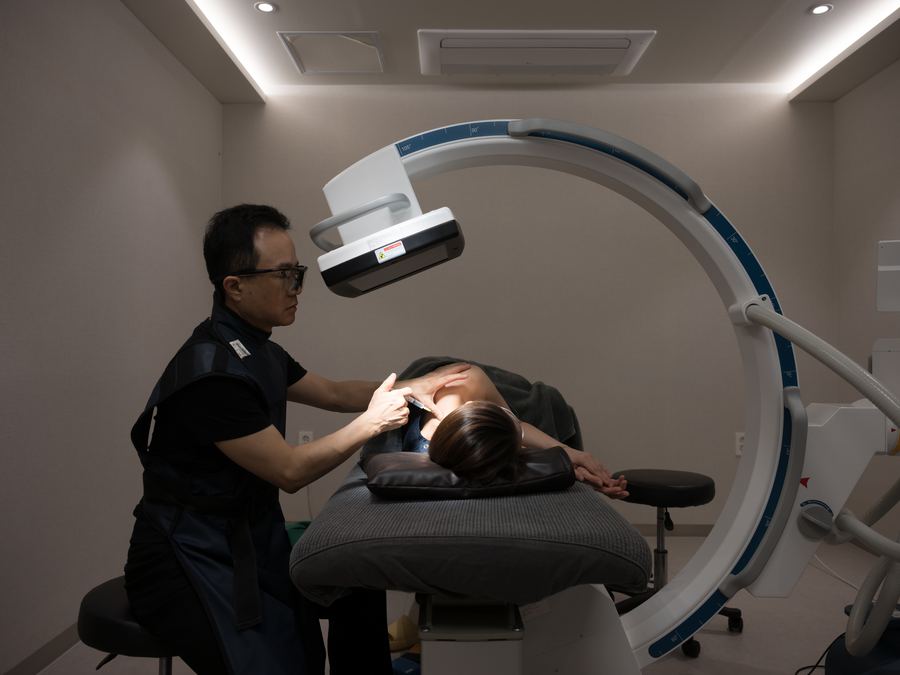
Planning Your Trip: Rest After Treatment and Length of Stay
According to the clinic, most people can walk on the day of treatment. The 8th floor has inpatient rooms, and you can choose a day ward stay of 6 hours or more to rest and return to your accommodation the same day. If continued observation is needed, a 24-hour stay is also possible.
The number of pain treatment sessions varies by person, and follow-up is sometimes needed. Tell us your symptoms and how long you will be in Korea so the doctor can confirm whether your schedule is enough. Please also check with the doctor about when you can fly after treatment.
For pricing, please ask through the "Request booking" button or the live chat on K-Clinic.
Opening Hours and How to Get There
The clinic is at Downtown Building, 214 Simin-daero, Dongan-gu, Anyang-si, Gyeonggi-do, on the 7th floor (treatment rooms) and 8th floor (inpatient rooms). Take Subway Line 4 to Beomgye Station, about a 5-minute walk, and parking is available in the building.
- Mon & Fri: 09:30–20:00
- Tue: 14:30–20:00
- Wed: 09:30–19:00
- Sat: 09:30–14:00
- Thu & Sun: Closed
To avoid busy periods, note that the clinic is open until 8 PM on Mondays and Fridays, so an afternoon arrival still works. On Tuesdays it only opens at 14:30, so plan accordingly.
Frequently Asked Questions From International Visitors
Q: Can I still use an MRI taken in my home country?
A: The clinic recommends bringing MRI, CT or X-ray images or medical records from home (on disc or as files). Whether new imaging is needed is the doctor's decision.
Q: Can I have an injection if I take anticoagulants or painkillers?
A: Please tell the clinic about all medications you take, especially anticoagulants and painkillers. Whether treatment is possible is the doctor's decision.
Q: Could numbness come from my neck or something else?
A: Numbness in the fingers can also be caused by carpal tunnel syndrome or an elbow nerve problem, which a doctor needs to tell apart through examination. For leg symptoms too, we recommend a doctor's overall assessment.
Q: Can I be treated on my first visit?
A: At the first visit you'll have a consultation, a physical exam and imaging first, and treatment can be given the same day when appropriate.
Book Dr.Google Pain Medicine Through K-Clinic
The clearer your symptom description, the more efficient your visit. Use K-Clinic to send a free inquiry through the "Request booking" button or the live chat, and get your symptoms, images and length of stay organized first.
We'll check with the hospital for you:
- Whether your schedule is enough for your symptoms and length of stay
- What format to bring your MRI images from home in
- Whether your current medications need to be mentioned in advance
- Your preferred date and time slot (including Tuesday and Saturday hours)
Once your booking is complete, we'll let you know your arrival time and the address.
Actual treatment depends on the results of your examination.
Frequently asked questions
Is leg pain after walking that eases with rest spinal stenosis?
It may be, but symptoms alone cannot confirm it. A herniated disc or another cause can look similar, so a doctor needs to assess you with a history, a physical exam and an MRI.
Does Dr.Google Pain Medicine in Korea treat spinal stenosis?
Yes. The clinic's treatment areas include spinal stenosis, as well as lumbar and cervical disc herniation. The actual approach is decided by the doctor based on your MRI and symptoms.
Does spinal stenosis always need surgery in Korea?
No. According to the clinic, when there is no progressive paralysis or loss of bladder or bowel control, non-surgical treatment can usually be considered first. Whether it suits you is the doctor's decision.
What should I bring to a pain clinic visit in Korea?
Bring MRI, CT or X-ray images or medical records from your home country (on disc or as files), and tell the clinic about all medications you take, especially anticoagulants and painkillers.
Clinics in this article
About 5 min walk from Beomgye Station (Line 4)