 K-Clinic
Pain Clinic Korea: Dr.Google Pain Medicine, Anyang
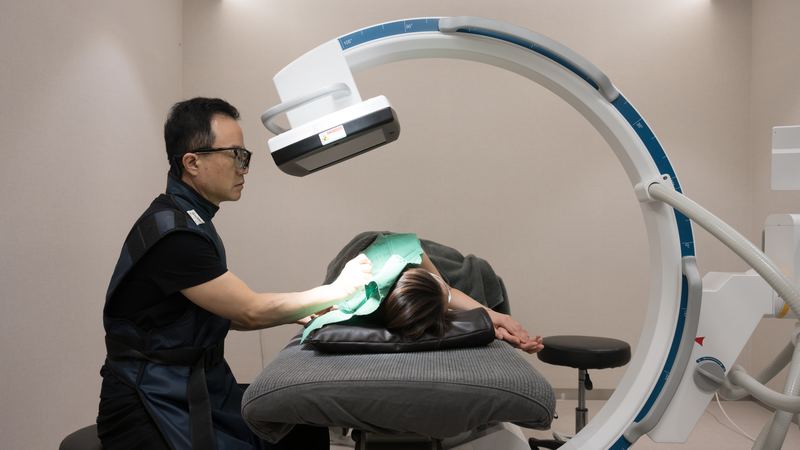
A pain medicine clinic looks for the cause of your pain, especially nerve pain, herniated discs, spinal stenosis and post-shingles neuralgia. If pain runs from your back into your buttock and leg, your arm or fingers go numb, or you were told to have surgery and want other options, ask here first. At Dr.Google Pain Medicine in Anyang, Director Koo Jae-won, an anesthesiology and pain medicine specialist, sees every patient personally, confirms the target with C-arm imaging, then judges whether non-surgical treatment is possible. If another specialty is needed, the doctor decides.
The short answer: pain medicine looks for the cause of pain, especially nerve pain
The focus of pain medicine is to find where the pain comes from, particularly nerve-related pain. The philosophy at Dr.Google Pain Medicine is "surgery isn't always necessary; first find the cause of the pain."
If your symptoms are back pain spreading into the buttock and leg, neck and shoulder pain with arm numbness, or pain that continues after shingles blisters have healed, asking a pain clinic first is a sensible step. Whether you need another specialty afterwards is the doctor's decision.
This article covers the usual differences between four specialties, the conditions this clinic treats, and what to prepare before visiting Korea.
Pain clinic, orthopedics, neurosurgery or rehab: how they usually differ
Many people find these four specialties hard to tell apart. The following is a commonly used breakdown; actual roles vary by hospital and doctor:
- Pain medicine (anesthesiology and pain medicine): finds the source of pain and often treats it without surgery, using injections and nerve blocks.
- Orthopedics: deals with structural problems of bones, joints and ligaments, and can assess surgery when needed.
- Neurosurgery: deals with the brain and spinal nerves, and can assess surgery when needed.
- Rehabilitation medicine: uses exercise and physical therapy to help restore function.
The key point: you don't need to work out the right specialty yourself. Overlapping symptoms are normal, and the doctor decides the direction after reviewing your imaging and examination.
What does Dr.Google Pain Medicine treat?
The clinic's materials list six categories of conditions:
- Shingles and post-herpetic neuralgia (injections, IV drips, medication)
- Lumbar disc herniation (non-surgical treatment)
- Cervical disc herniation (non-surgical treatment)
- Spinal stenosis
- Shoulder, elbow, knee and hip pain
- Trigeminal neuralgia and tinnitus
The main focus is shingles, post-herpetic neuralgia and lumbar disc herniation. The treating doctor is Director Koo Jae-won (구재원), MD, PhD, a specialist in anesthesiology and pain medicine, who personally handles everything from the first consultation and tests to follow-up after treatment.
Which symptoms may be related to nerves?
The clinic's materials list three common pairings:
- Shingles → post-herpetic neuralgia: pain continues after the blisters fade, feels like needle pricks or burning, and may keep you awake at night.
- Lumbar disc herniation → pain in the back, buttock and leg: pain runs from the lower back into the buttock and leg, is worse when sitting for long or coughing, and may come with weakness in the ankle or toes.
- Cervical disc herniation → neck, shoulder and arm numbness: stiff neck and shoulders, pain inside the shoulder blade, numb arms and fingers, and a tendency to drop things.
Note: finger numbness can also come from carpal tunnel syndrome or an elbow nerve problem. A doctor needs to examine you to tell them apart, so don't draw your own conclusion.
Shingles is not only a skin problem; the virus damages nerves. If you still have stabbing or burning pain, or pain when clothing touches the skin, after the blisters have gone, it needs to be treated as nerve pain. Depending on where it appeared, the clinic connects you to ophthalmology or ENT when needed.
When should you ask a pain clinic first?
Checking the source of pain at a pain clinic first makes sense in these situations:
- Pain runs from the back into the buttock, thigh or calf, and is worse when sitting for long or coughing.
- Neck and shoulder pain comes with numbness in the arm or fingers.
- Shingles blisters have healed, but nerve pain remains.
- You were advised to have surgery and want to hear non-surgical options first.
- Painkillers haven't stopped the pain from coming back, and you don't know why.
On the other hand, if you have progressive weakness (getting weaker over time) or lose control of your bladder or bowels, these generally need prompt assessment by a doctor for possible surgery and should not be delayed. Follow the doctor's judgment.
How does the doctor decide the next step?
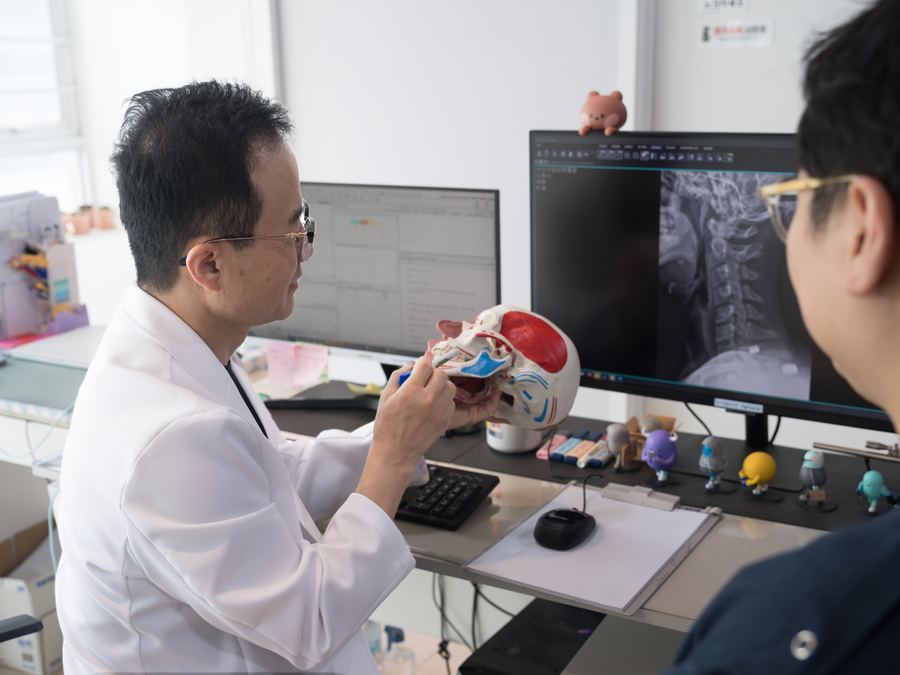
The clinic's approach is to decide based on MRI, symptoms and whether there is any loss of muscle strength. If there is no progressive weakness, non-surgical treatment such as injections can be considered first.
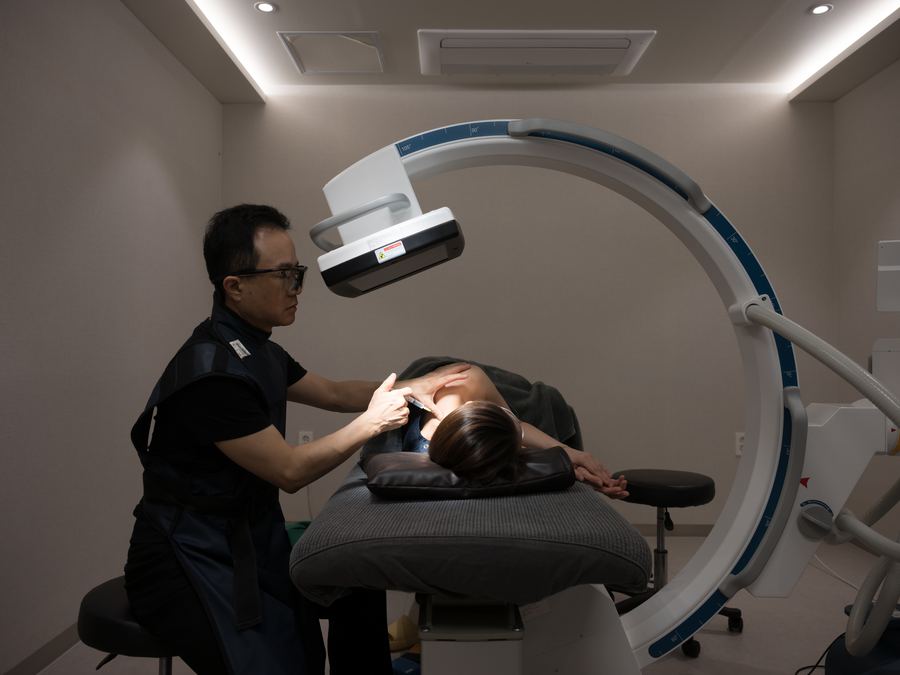
During treatment, a C-arm imaging device confirms the nerve and treatment site, and an ultra-fine MTS microneedle reaches the source of pain to minimize tissue damage. The clinic's materials state that this approach does not require separate physical therapy.
Steroids are used only after careful consideration of the condition, and the clinic avoids them where possible. Results and recovery vary by person and depend on the doctor's judgment.
Visit flow and recovery stay for international patients
The clinic's materials describe the flow as follows:
- First visit: consultation, physical examination and imaging to confirm the source of pain; treatment the same day if suitable.
- After treatment: most people can walk the same day, and can rest in the day ward before returning to their accommodation.
- Afterwards: whether you need another treatment, and how far apart, is decided by the doctor based on your response.
The 8th floor has wards (single and double rooms), with a choice of a day ward stay of 6 hours or more or 24-hour admission. The number of pain treatments varies by person and follow-up treatment is sometimes needed, so tell the clinic your symptoms and length of stay first, and the doctor will confirm whether your schedule is enough.
What to prepare before you go
- Bring any MRI, CT or X-ray images or medical records from your home country, on a disc or as files.
- Tell the clinic about any medication you take, especially blood thinners and painkillers.
- For shingles, tell them the date of onset and the affected area.
With imaging on hand, it is easier for the doctor to make a judgment. Please also check your flight timing with the doctor.
Hours and access: how to reach the clinic near Beomgye Station
Dr.Google Pain Medicine is in Anyang, Gyeonggi-do, about a 5-minute walk from Beomgye Station (Line 4). From Seoul, take Subway Line 4 to Beomgye Station and walk from the exit; parking is available in the building.
Address: 214 Simin-daero, Dongan-gu, Anyang-si, Gyeonggi-do, Downtown Building, 7F (treatment rooms) and 8F (wards).
Opening hours:
- Monday and Friday: 09:30–20:00
- Tuesday: 14:30–20:00
- Wednesday: 09:30–19:00
- Saturday: 09:30–14:00
- Thursday and Sunday: closed
The clinic opens only in the afternoon on Tuesday and closes at 14:00 on Saturday, so keep this in mind when planning your schedule.
Common questions from international visitors
Q: Can I fly right after treatment?
A: Most people can walk normally on the day of treatment, but please check your flight time with the doctor first.
Q: The blisters have healed but it still hurts. Can it still be treated?
A: Yes. Pain that continues after the blisters fade is usually post-herpetic neuralgia and needs to be treated as nerve pain. We recommend getting it checked as early as possible.
Q: I was already advised to have surgery. Can I still ask?
A: Yes. The clinic says people who have been advised to have surgery are welcome to come and hear other options, with the direction decided from your MRI and symptoms.
Q: How much does it cost?
A: Please ask through K-Clinic's live chat or the "Request booking" button on this page.
Book Dr.Google Pain Medicine through K-Clinic
If you're not sure which specialty your symptoms need, use the "Request booking" button or the live chat on K-Clinic for a free consultation. Tell us your symptoms, length of stay and the imaging you have.
We can check with the clinic:
- Whether your symptoms suit a first visit to the pain clinic
- Whether your length of stay is enough for treatment and follow-up
- How to bring your MRI, CT and X-ray images from home
- Available dates and time slots (including the Tuesday and Saturday hours)
Once your booking is confirmed, we will send you the arrival time and address.
Actual treatment depends on the results of your examination.
Frequently asked questions
Should I see a pain clinic first for back pain and hand numbness in Korea?
If pain runs from your back into your buttock and leg, or your arm and fingers feel numb, a pain clinic is a reasonable first stop to find the source of the pain. The clinic's listed scope includes lumbar and cervical disc herniation, spinal stenosis, shingles and post-herpetic neuralgia. Whether it suits you is decided at the doctor's examination.
What conditions does Dr.Google Pain Medicine in Anyang treat?
It focuses on shingles, post-herpetic neuralgia and lumbar disc herniation. It also treats cervical disc herniation, spinal stenosis, shoulder, elbow, knee and hip pain, and trigeminal neuralgia and tinnitus.
Do I always need surgery for a herniated disc in Korea?
No. If there is no progressive weakness or loss of bladder or bowel control, most cases can first be considered for non-surgical treatment, with the direction decided from your MRI and symptoms. If you have already been advised to have surgery, you can still come to hear other options.
Is numbness in the fingers always a neck problem?
No. Finger numbness can also come from carpal tunnel syndrome or an elbow nerve problem, and a doctor needs to examine you to tell them apart.
Clinics in this article
About 5 min walk from Beomgye Station (Line 4)